
The Light Is Coming
Winter Solstice, Sleep & The Physiology of Renewal

The Longest Night in the North
Today is December 21st, Winter Solstice. If you live in Anchorage, Alaska, this is the darkest day of the year: 5 hours and 28 minutes of official daylight. The sun rises at 10:14 AM and sets at 3:41 PM.
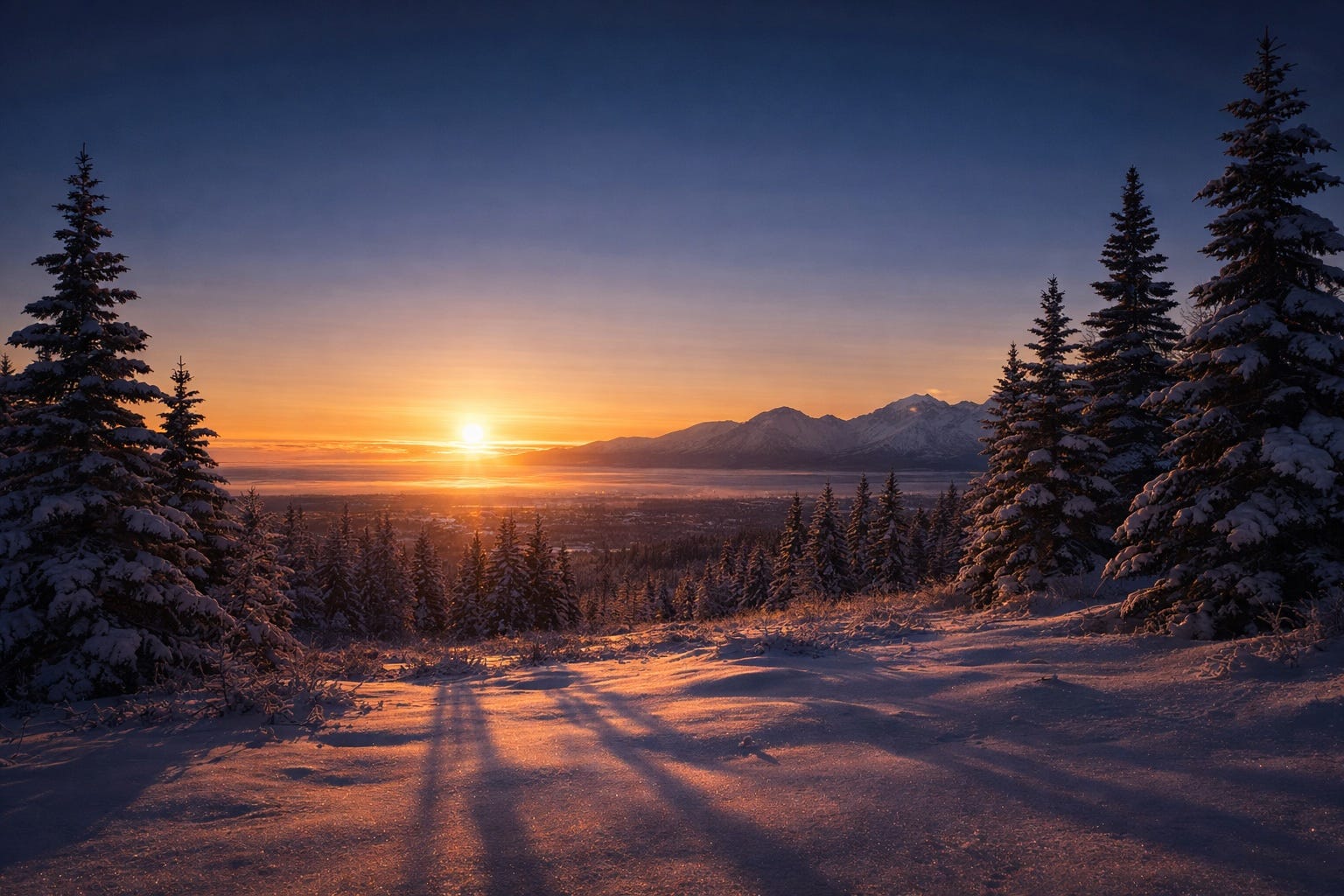
At its peak, the sun barely skims 5 degrees above the horizon. It drifts sideways across the southern sky but not overhead. But the colors? They’re magic. Purples, oranges, reds and all color shades between them. The sky hovers between sunrise and sunset all day.
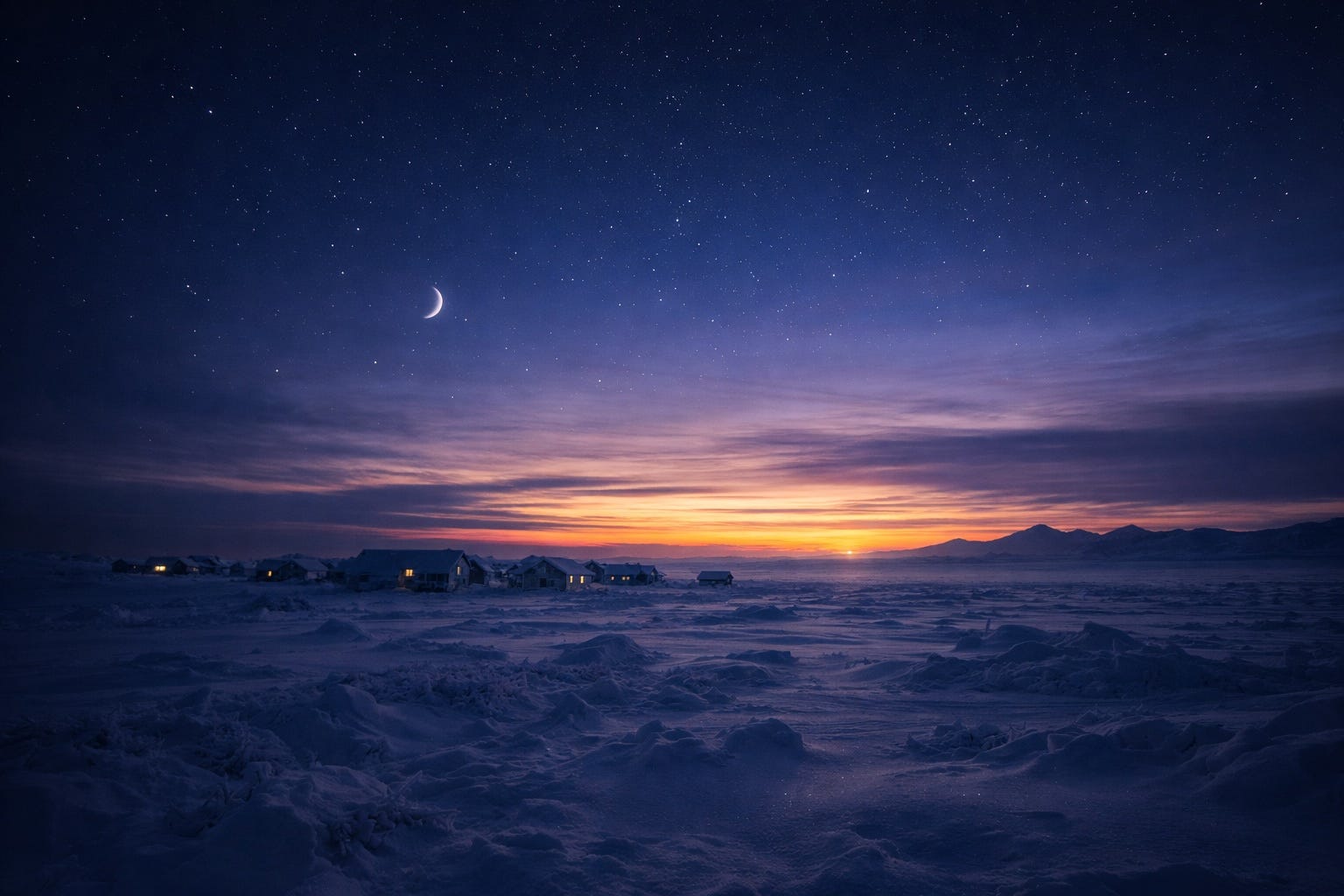
In the far north of Alaska, in the city of Utqiaġvik (formerly Barrow), the sun doesn’t rise at all. The polar night stretches for more than 60 days. Still, life continues. People walk, work, play, and live their everyday lives under twilight and moonlight. This is what it feels (and looks) like to live in rhythm with the dark and the light. The darkness shapes us. But so does the return of the light.
What It’s Like to Live Here
Anchorage life doesn’t stop in winter. But it shifts. You drive to work in total darkness (mid-October until mid-March). Moose lights are standard (bright lights). So are headlamps. The sun moves sideways. At noon, the sun glows orange behind the Chugach Mountains. Evening hits by 4:00 PM (it feels like midnight). Sleep patterns awkwardly drift. Energy levels dip. Some days you don’t know if it is evening or morning.
Still, we keep going. The light is coming. Every Alaskan knows: after solstice, the pace of light recovery is fast. By late January, we gain 4–5 minutes of daylight per day. It adds up slowly and then it snowballs. By mid-March we have more daylight than most of the lower 48. That’s why winter solstice feels like hitting bottom.. in a good way.
Indigenous Wisdom and Seasonal Cycles
Long before clocks or calendars, Indigenous communities across Alaska lived in deep rhythm with the seasons. In the Athabascan language, dzaanh ledo means “the day is sitting.” Dzaanh ledo describes the stillness of the solstice, when the sun appears paused or motionless.
In Utqiaġvik, where the sun stays below the horizon for months, the Iñupiat people celebrate Quviasukvik: a season of renewal, reflection and the return of light. These traditions weren’t just survival. They were about orientation. The traditions told the people where they were in the cycle of life. They reminded them and us that darkness is not the end.
Circadian Rhythm, Light, and Seasonal Biology
Your brain doesn’t know what time it is unless your eyes detect a signal and send a message to your brain. When sunlight disappears, your circadian rhythm drifts out of alignment. Melatonin stays elevated. Cortisol shifts (increase in the winter and decrease in the summer). Energy levels dip. Sleep becomes more fragmented. Mood drops and appetite may rise. This isn’t lack of willpower or weakness. It’s biology.
But the solution is simple: light. Bright light therapy, especially in the first 30–60 minutes of waking can reset your internal clock, reduce symptoms of Seasonal Affective Disorder, and improve energy, focus, and sleep.
How to Use It
Use a 10,000-lux light box daily
Sit 16–24 inches from your face
Keep the light in your field of view, not your direct gaze
Use for 20–30 minutes, within 1 hour of waking
Avoid after 2 PM, or it can delay sleep
Supplement with:
Morning outdoor light exposure (even on cloudy days)
Movement early in the day
Consistent wake/sleep times (ideally within 30 minutes)
Low light + no screens in the evening
Light is medicine. And in the far north, it’s essential.
A Patient Who Found His Reason
A few years ago, I met a man who had just moved to Anchorage. He came to be near his daughter and his young grandson. He had undergone three-vessel coronary bypass surgery in the past year. He was stable. Retired. Not wealthy. Not sick. But not thriving.
His hemoglobin A1c was 9.0%, his blood pressure was elevated and he was on multiple medications. He had been told he needed insulin but he didn’t want any of it. He did not want a life of routinely taking pills. His mood was flat. He wasn’t angry but he was disconnected. Even the small joys of daily life weren’t registering as wins. He was a little depressed. We talked. I listened. I didn’t push. We discussed simple goals: 30 minutes of activity most days, small nutrition shifts, adding in strength training and consider joining a gym.
He returned 3–4 months later. He was still subdued but I noticed a flicker, a trace of engagement. I offered encouragement. We again reviewed healthy lifestyle anad behaviors. He seemed slightly more curious. Six months later he came back smiling. He had lost 30 pounds. His hemoglobin A1c was in the low 6.0s. His blood pressure was in the normal range. He was down to a short list of essential meds.
I asked what changed. “I started going to the club. I’m watching what I eat. And I have a little boy to live for.” That was the switch. Purpose.
That purpose pulled him into the light.
What This Season Teaches Me
Solstice isn’t just a calendar event. It’s biological. Psychological. Cultural. And sometimes, deeply emotional.
You might be tired. Or grieving. Or overwhelmed. Or just not sure what you feel. That’s okay.
The light is coming. You’re not alone.
Quick Wins for the Dark Season
Use a 10,000-lux light box (morning only)
Keep consistent wake/bed times (even on weekends)
Get outside daily
Avoid screens 1–2 hours before bed
Strength train 2–3x per week (even 20 minutes counts)
Prioritize protein, fiber, and real food
And most importantly:
Reflect. Rest. Don’t rush it.
This is a season of stillness, not stagnation.
Let the pause shape you.
Let the light return.
–Jake
References
Terman M, Terman JS. Light therapy for seasonal and nonseasonal depression: efficacy, protocol, safety, and side effects. CNS Spectrums. 2005;10(8):647–663.
Czeisler CA et al. Stability, precision, and near-24-hour period of the human circadian pacemaker. Science. 1999;284(5423):2177–2181.
Rosenthal NE et al. Seasonal affective disorder: a description of the syndrome and preliminary findings with light therapy. Arch Gen Psychiatry. 1984;41(1):72–80.
Great article as always. This has been what feels a longer winter maybe just because it is so cold and no snow really to speak of just ice. We are now on the uphill swing thank goodness.
Great reminder.
It is easy to get gobbled up by this dark cold season.